This article introduces microgrids by explaining their defining characteristics, system architecture, and operating principles. It also provides an overview of microgrid operation modes, power architectures, distributed generator roles, and load types, highlighting how microgrids balance demand and supply in both grid-connected and islanded conditions.
A microgrid is an electrical system comprised of distributed energy resources and loads that operates in parallel to the utility grid or as an isolated system. A microgrid can be defined by three key characteristics, as follows.
Local
A microgrid is focused on catering to nearby customers. Therefore, the energy produced is referred to as local energy. This characteristic distinguishes a microgrid from the utility grid. Conventional utility grids are based on centralized generation that involves long-distance transmission and distribution over the power network. This results in losses of generated electrical energy. Microgrids overcome this issue by generating at or near the point of consumption.
Independent
Grid-connected solar PV systems that are installed and owned by consumers for domestic or commercial purposes are restricted to generating electricity when the utility grid is unavailable. Unlike a solar PV system, a microgrid maintains an uninterrupted power supply, catering to the local loads by operating as an electrical island even when the utility grid has failed. The multimode operation (grid-connected and islanded) makes a microgrid an independent electrical island. However, there are certain differences between the islanded operation and the grid-connected mode in terms of control, balancing demand and supply, prioritizing and catering for loads, etc. Novel control, protection, and energy management methods for microgrids ensure a seamless transition between multiple modes of operation, thus making a microgrid independent.
Intelligent
Most advanced microgrids are intelligent. There are novel intelligent control and energy management approaches for microgrids that satisfy the goals of the microgrid as well as those of consumers, in terms of maximizing the utilization of renewable generation, managing the demand side, minimizing the cost of energy, etc. For example, an advanced controller can track real-time changes in the power prices on the central grid. (Wholesale electricity prices fluctuate constantly based on electricity supply and demand.) If energy prices are inexpensive at any point, it may choose to buy power from the central grid to serve its customers, rather than use energy from, say, its own solar panels. Its own solar panels could instead charge its battery systems. Later in the day, when grid power becomes expensive, the microgrid may discharge its batteries rather than use grid power.
Microgrid Power Architecture
Microgrid Structure and Components
A microgrid is a small-scale electrical system that is designed to provide power for a small community. As given in Figure 1, a microgrid is comprised distributed energy resources such as solar photovoltaic, wind turbines, and fuel cells, distributed loads, power electronic interface units (DC/DC, DC/AC, AC/DC, and AC/AC converters), and a point of common coupling (PCC).
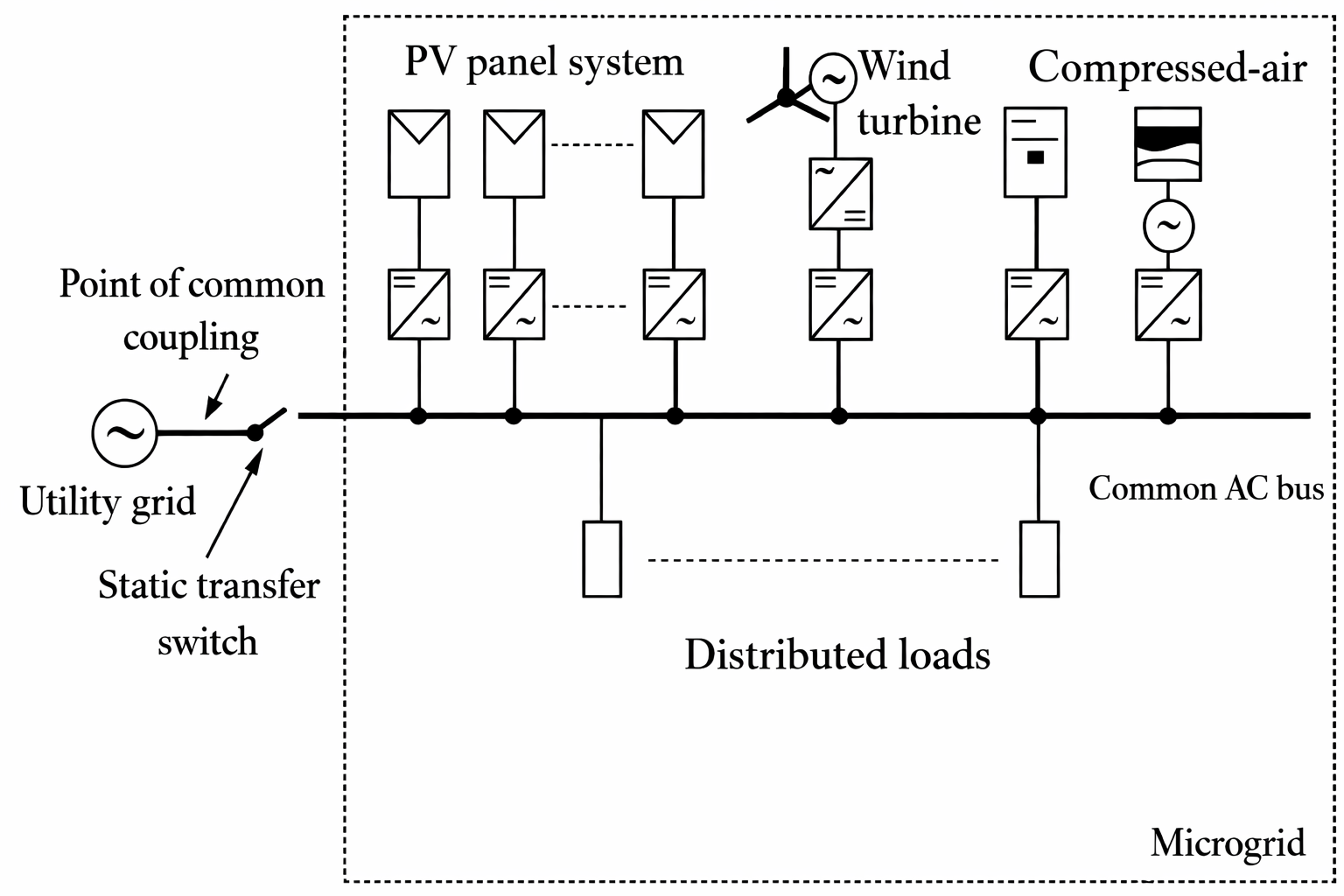
Figure 1. General structure of a microgrid
Large rotating machines introduce inertia to the system, such that there will be an excess time for the system to stabilize. Since microgrids are comprised of renewable sources, which lack inertia, an energy storage unit has become a necessity. A battery backup or other energy storage unit in a microgrid functions as a synchronous generator. Microgrids often have technologies such as solar PV or micro turbines, both of which require power electronic interfaces such as DC/AC or DC/AC/DC converters to get connected to the electrical system.
Microgrids operate in either grid-connected or islanded mode. When the utility grid fails, the PCC allows the microgrid to disconnect from the grid and operate as an independent, electrical island.
Types of Power Architecture
Microgrid power architecture can be classified based on the available power lines, the nature of the sources, and the operation, as shown in Figure 2.
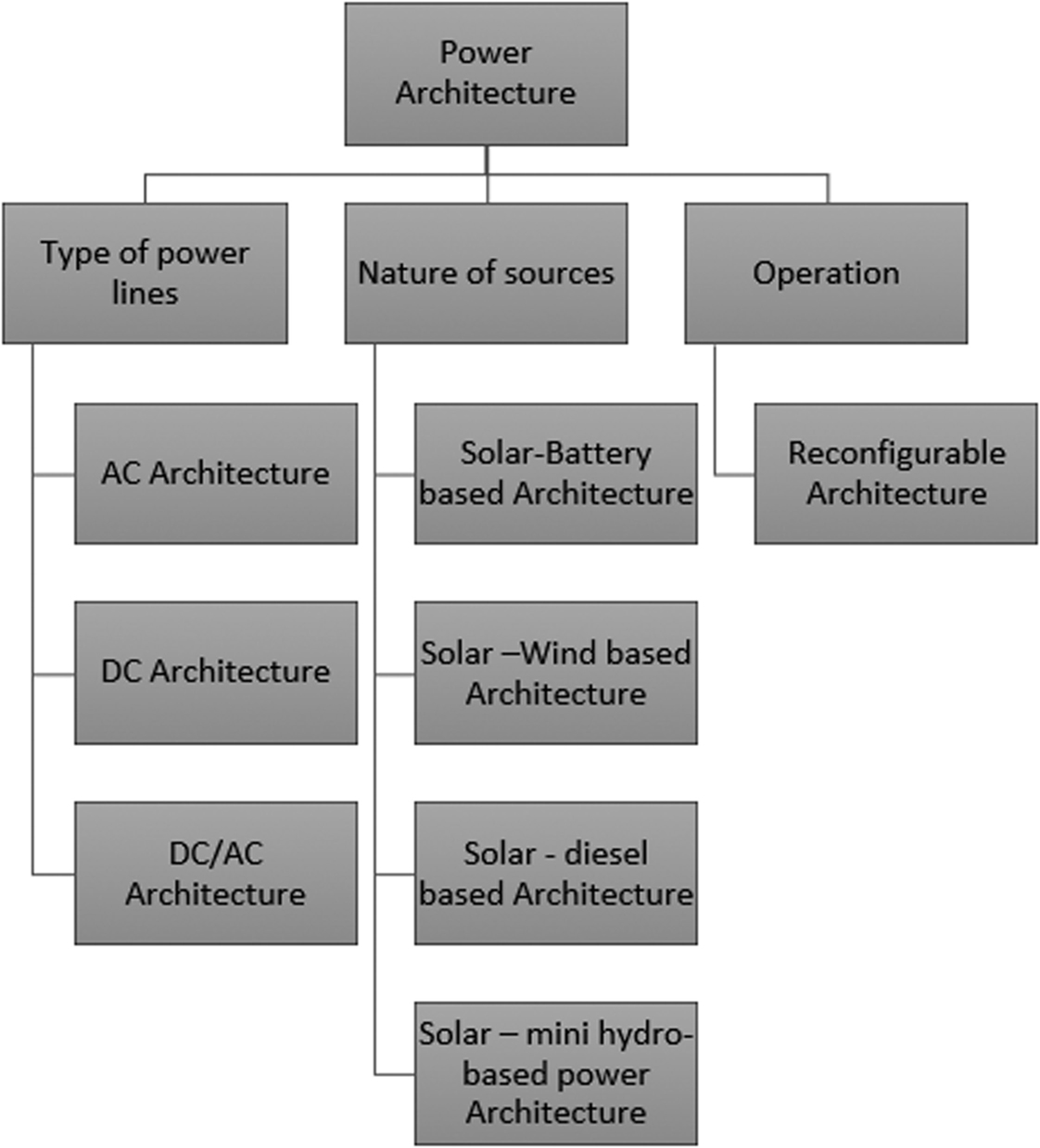
Figure 2. Microgrid power architecture classification
According to the type of power lines
- AC power architecture
- DC power architecture
- DC/AC power architecture
According to the nature of sources
- Solar-battery-based power architecture
- Solar–wind-based power architecture
- Solar–diesel-based power generator
- Solar–mini hydro-based power
According to the operation
- Reconfigurable architecture
Operation of Microgrid
Modes of Operation
A microgrid is generally operated while connected to the main grid when this is available. In a case of grid outage, it will shift to operating in islanded mode, using its own generation sources, such as renewable sources like solar panels, batteries, diesel generators, and so on.
Grid-Connected Mode
In the grid-connected mode, the utility grid is in the active state. The static switch is kept closed as shown in Figure 3. The utility regulates the frequency and voltage of the microgrid such that the distributed generating units follow the main grid’s frequency variations.
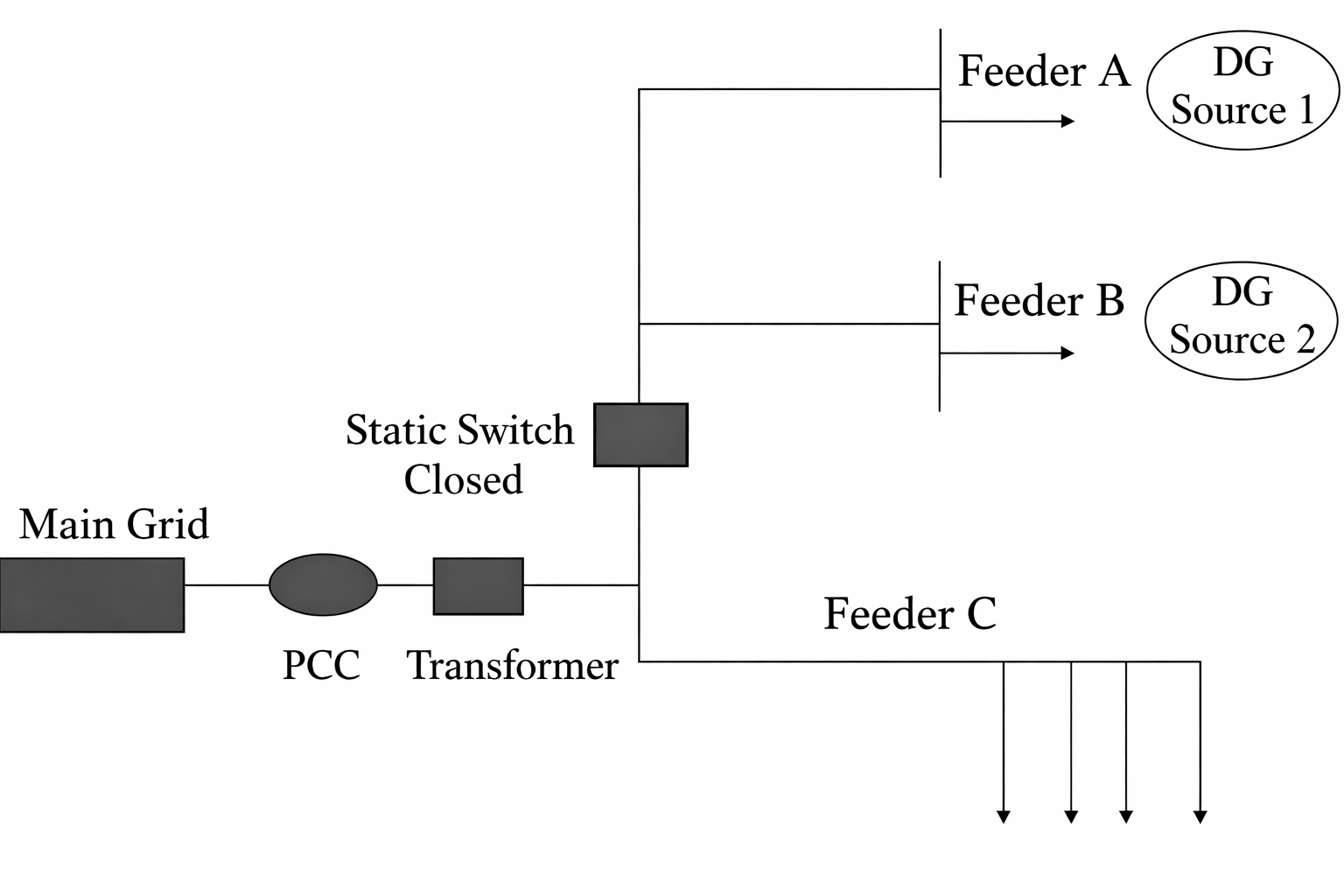
Figure 3. Grid-connected microgrid
In grid-connected microgrids, the demand–supply mismatch is overcome by injecting the excess power generated in the microgrid to the utility grid, and consuming grid power when the in-house generation is insufficient to cater for the local loads. The energy management functions of grid-connected microgrids include minimization of the cost of energy, minimization of the grid dependency of the microgrid, optimum utilization of the energy storage, generation scheduling and dispatching of DERs, and strategic and economic operations.
Islanded Mode
In the islanded mode, the utility grid does not supply power to the microgrid. The static switch is kept open, as shown in Figure 4. The microgrid frequency and voltage do not follow the variations of the main grid. In a grid outage or as scheduled, a microgrid can be isolated from the main grid’s distribution system at the PCC.
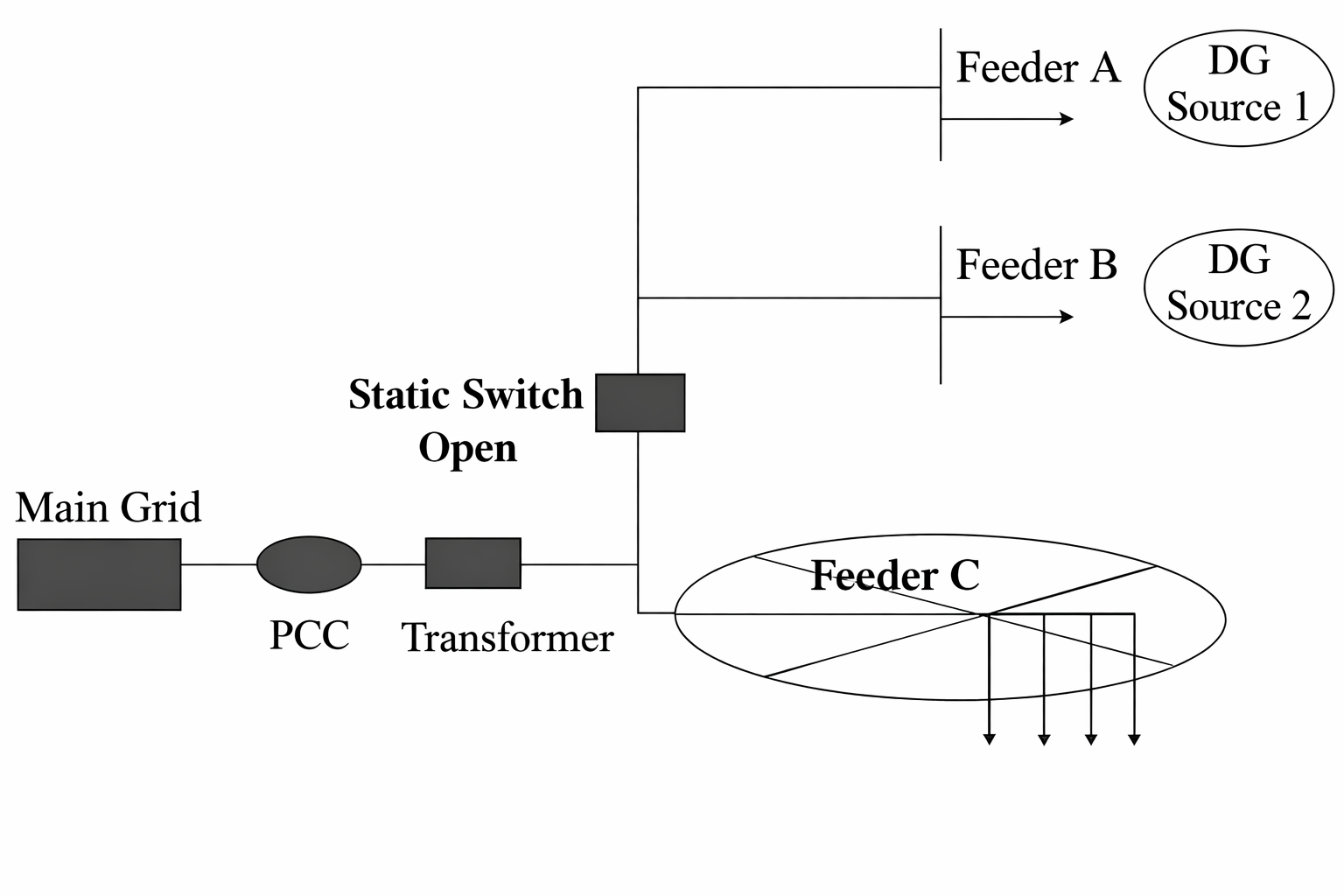
Figure 4. Islanded microgrid
As shown in Figure 4, all the feeders, except for feeder C, are supplied by the distributed energy resources of the microgrid. However, with the limited generation capacity and reliance on intermittent energy resources, it is necessary to minimize the demand–supply deficit and maintain an uninterrupted power supply to the critical loads. A priority order for catering for loads has to be set up to ensure that important loads get an uninterrupted power supply. Feeder C is considered as a feeder with non-critical loads such that, during the islanded mode of operation, it is not supplied by the micro sources.
Demand–Supply Balance
Demand–supply balance determines the frequency stability of a power system. Figure 5 is a graphical representation of the effect of demand–supply variation on the system frequency through the operation of a balance scale. A standard frequency is essential to avoid damage to equipment resulting from multiple frequencies operating alongside each other. When it comes to providing electricity on a national basis, this has huge implications.
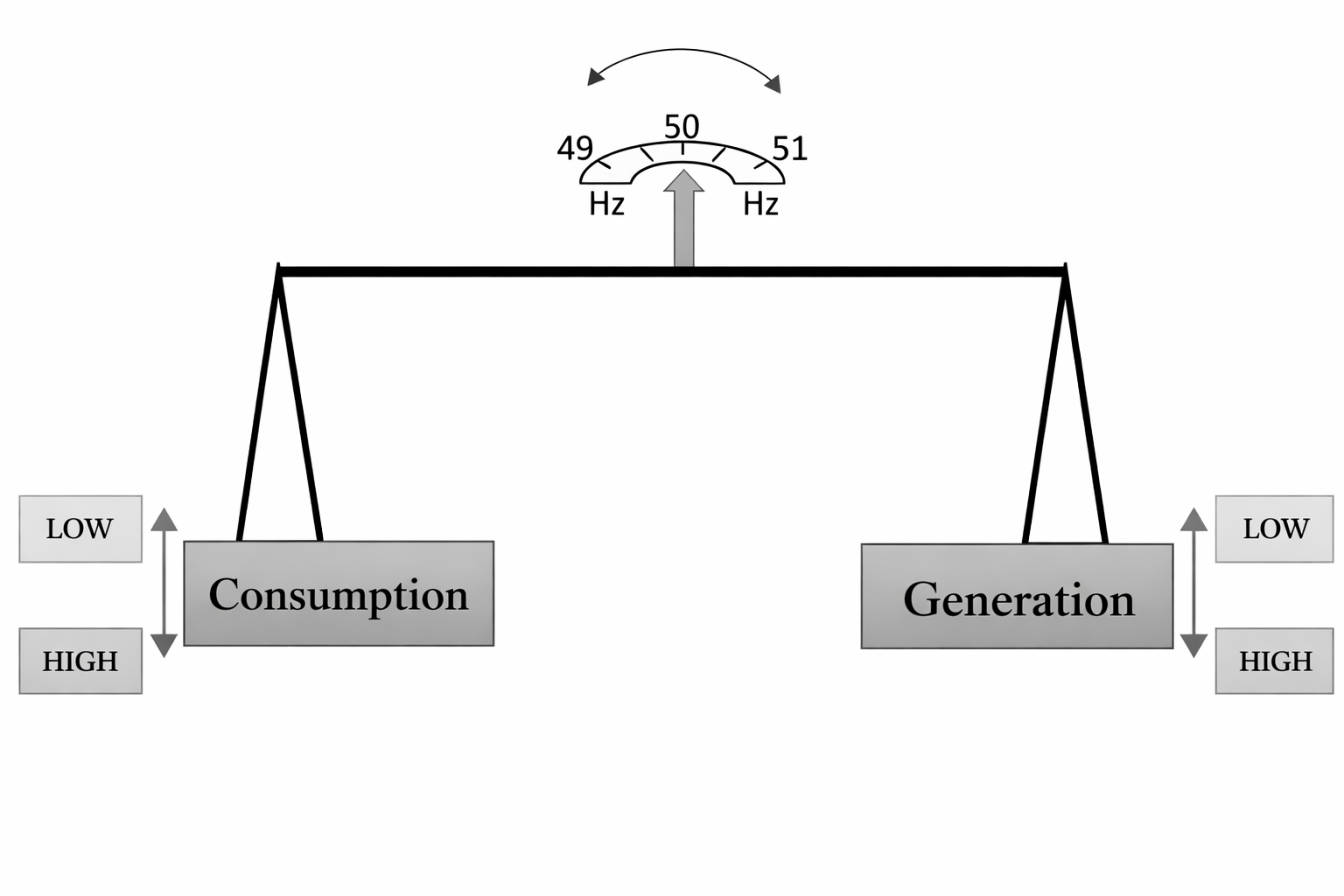
Figure 5. Frequency deviation from the nominal value represents a mismatch between active power generation and consumption
It is more important to maintain frequency stability across the power system than to maintain an exact standard frequency. For example, the standard frequency in the United States is 60Hz, while it is 50Hz in Great Britain. Japan follows multiple standard frequencies, such that the western and eastern regions of the country run at 60Hz and 50Hz, respectively. Stepping up and down the frequency of the electricity that flows between the two regions is handled by power stations located across the middle of the country.
When the demand exceeds the generated power, the rotational generators may start to decelerate, resulting in a decrease in system frequency. In such under-frequency conditions, a load shedding plan is activated in order to avoid power cuts. This is because, if the frequency falls too much, the power plants switch off one after another, until there is a complete collapse of the grid (that is, a power blackout). When the generation exceeds the demand, the rotational generators may start to accelerate, resulting in an increase in system frequency.
Unlike a conventional power system, a microgrid with renewable energy resources such as solar PV lacks inertial generation, leading to very rapid frequency and voltage variations within the microgrid in a demand–supply mismatch.
Types of Distributed Generators Based on Different Operating Conditions
Grid-Forming Units
When a microgrid operates in the islanded mode, the system voltage and frequency should be regulated to avoid demand–supply mismatches. This is achieved through grid-forming units. As the name implies, in the absence of the main grid, a grid-forming unit regulates the voltage and frequency in a similar manner to the regulation in the grid-connected operation. In the grid-connected operation, the voltage and frequency regulation is done through the main grid, converting grid-forming units to grid-feeding units. Therefore, grid-forming units should be designed and controlled to operate in both islanded and grid-connected modes accordingly.
Examples of grid-forming units are gas turbine generators and CHP systems, diesel generators, and energy storage.
Grid-Feeding Units
Non-dispatchable distributed generators such as solar PV and wind generators operate as grid-feeding generators by feeding generated power regardless of the amount, or as suggested by the microgrid operator. Grid-feeding units operate under the assumption that the microgrid is readily available to accept their generation.
Examples of grid-feeding units are wind units, solar PV units, and fuel cells.
Grid-Following Units
Grid-following distributed generators partially cater for local loads by following the microgrid frequency and terminal voltages. Dispatchable distributed generators, such as battery energy storage and micro turbines that have sufficient capacity and fast-responding abilities, can transfer from the grid-following mode to the grid-forming mode accordingly. Generally, distributed generators that are assigned to be grid-following units assist the grid-forming generators by sharing loads with a droop characteristic.
Types of Electrical Load
A device or electrical component that consumes electrical energy and converts it to another kind of energy is known as an electrical load. Electrical loads include equipment like lamps, air conditioners, motors, and resistors, to name but a few. In other words, an electrical load is a section of a circuit that connects to a distinct output terminal.
A common categorization of electrical loads considers their nature as resistive, capacitive or inductive loads, or a combination of these. In an alternating current (AC) configuration, these consume power differently. Lighting, mechanical, and thermal loads are represented by capacitive, inductive, and resistive load types.
Resistive Loads
Incandescent lights and electric heaters are two common examples of AC resistive loads. Electrical power is consumed by resistive loads in such a way that the current wave remains in phase with the voltage wave, and the power factor is unity.
Capacitive Loads
Current and voltage are out of phase in a capacitive load. The difference is that, with a capacitive load, the current reaches its maximum value before the voltage reaches its maximum value, such that the current waveform precedes the voltage waveform. Even though certain electrical loads are classified as resistive or inductive, there are no purely capacitive loads. Capacitive loads are frequently used in electrical substations to improve the system’s overall “power factor”.
Inductive Loads
In an inductive load, the current wave lags behind the voltage wave, such that the peak of the sinusoidal waveform of the current appears after the peak of the voltage waveform. As a result, the power factor is lagging. Transformers, motors, and coils are examples of inductive loads.
Current and voltage waveforms and phasor diagrams for resistive, inductive, and capacitive loads are given in Figure 6.
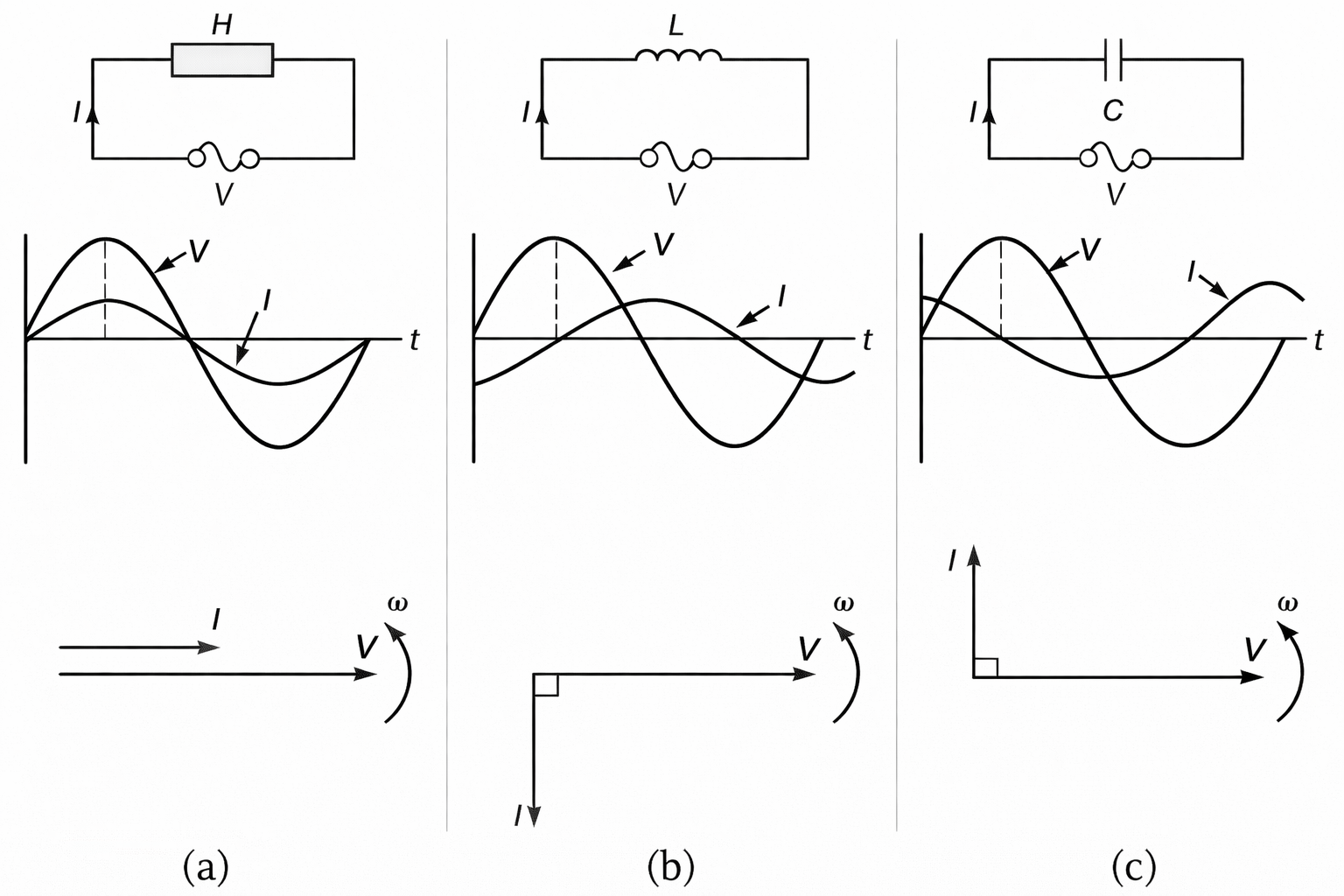
Figure 6. Current and voltage waveforms and phasor diagrams for (a) resistive load, (b) inductive load, and (c) capacitive load
Combination Loads
The majority of loads are not purely resistive, capacitive, or inductive. Various combinations of resistors, capacitors, and inductors are used in many real loads. Such loads have power factors less than unity and are either lagging or leading. The classification of electrical loads is based on various factors, as shown in Figure 7. 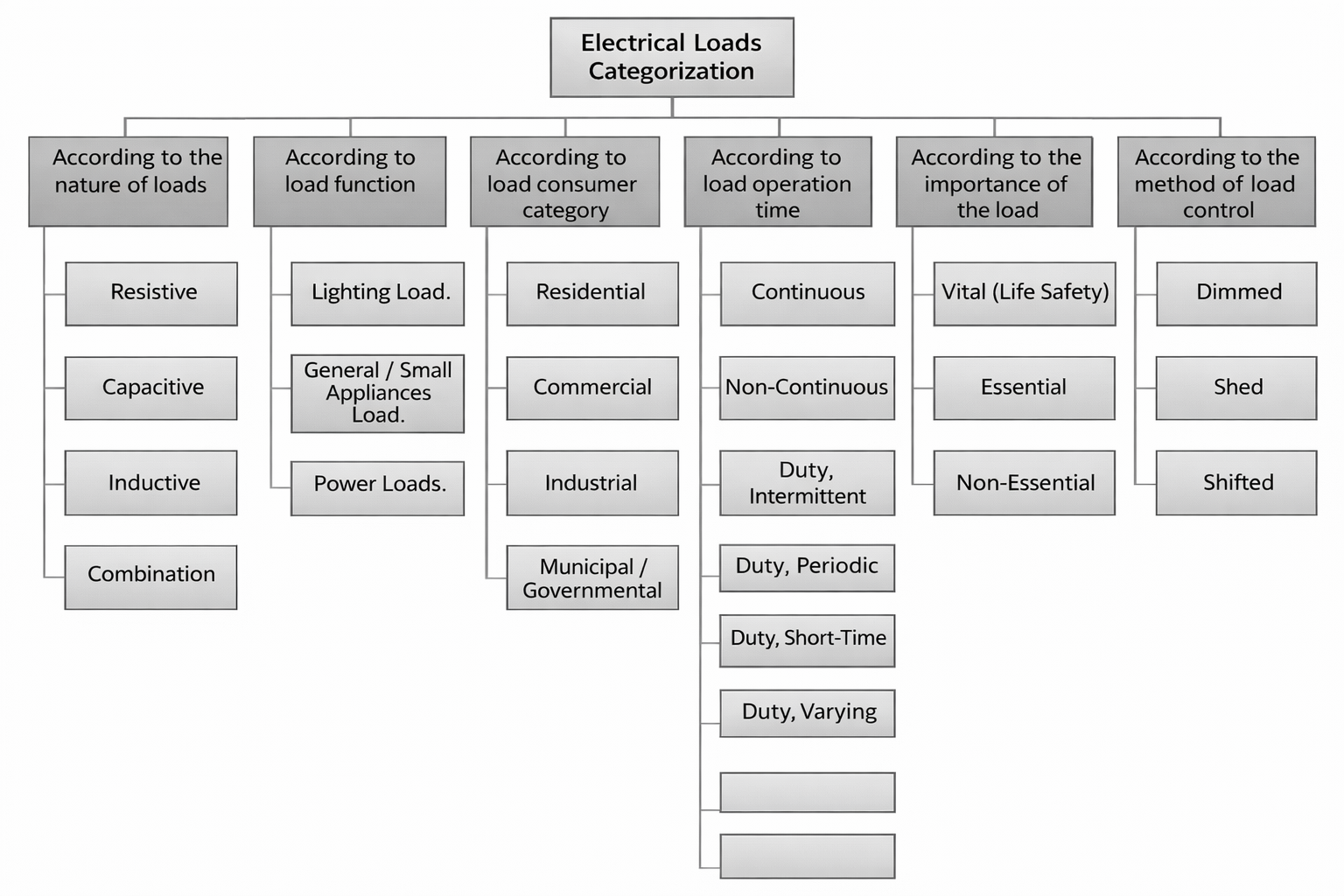
Figure 7. Electrical load categorization in Microgrid
Advantages and Disadvantages of Microgrids
Advantages of Microgrids
The microgrid concept can be adapted as a solution for the current energy crisis. The efficiency of a microgrid is higher than that of a conventional grid. A microgrid comprises micro sources that are located close to the point of consumption, such that the transmission losses are significantly lower than with a conventional grid. In addition, microgrids encourage the high penetration of renewable energy resources (RERs) by providing suitable integration platforms for loads and distributed generators.
The contribution of microgrids in reducing carbon dioxide emissions and avoiding the consequences of large-scale land use has major environmental benefits. One of the main advantages of a microgrid is its ability to operate in scenarios when the grid is available and when it has failed. The seamless transition from grid-connected to islanded mode and vice versa ensures an uninterrupted power supply to the loads within the electrical boundary of the microgrid. When the power system needs this, microgrids can isolate themselves from the grid to reduce the load on the grid with no, or minor, interruption to the loads.
However, microgrids can cater to critical loads with a reliable and good-quality power supply. A microgrid energy management system is advantageous in terms of reducing the cost of electricity to the users, the optimum utilization of renewable generation, active participation in demand response programs, and so on. When the generation of distributed energy resources is limited, non-critical microgrid loads are curtailed accordingly to ensure an uninterrupted power supply to crucial loads. In a novel approach, closely located islanded microgrids can be networked as microgrid clusters that are physically connected and functionally interoperable. The networking of microgrids allows islanded microgrids to share extra generation resource capacities to minimize demand–supply deficits among themselves and enhance the resilience and reliability of the power system.
Disadvantages of Microgrids
There are several limitations related to microgrids. The RERs in microgrids lack inertia (rotational kinetic energy), spinning reserves, and storage. Therefore, these three attributes should be artificially created for RERs. The inertia can be artificially created by adding energy storage units. Energy storage units can absorb mismatches in demand and supply within the microgrid and help in stabilizing the microgrid after a disturbance.
The continuous control and monitoring of intermittent RERs is another challenge when implementing microgrids. Mainly in islanded mode, voltage, frequency, and power quality should be controlled such that these parameters comply with the standards, in addition to the demand–supply balance.
Key Takeaways
Understanding microgrid operation, architecture, and control concepts is essential for designing power systems that are resilient, efficient, and capable of integrating high levels of distributed energy resources. By clearly defining operating modes, generator roles, and load characteristics, engineers can ensure stable operation during both normal and islanded conditions while prioritizing critical loads. These principles support practical applications such as community microgrids, campus power systems, remote electrification, and renewable integration, where reliability, flexibility, and intelligent energy management are increasingly important.